Holiday Hunger Challenge: Days 5-7: celebrate frugality
16 July, 2018
Things took off and turned rather hectic hence the lack of update here (a bit more activity over on my Instagram, @Maskrosblad).
After rather bleak and meagre days 1-3 I finally turned a bit of a corner on day 4. The pounding headache left me and it was as though my body had adapted to this new regime. Although I still missed things and missed out it was, as eluded to before, the lack of independence and spontaneity that really got to me. On the breadline it’s not financially viable to grab something on the go but also not always practical to pull out your plastic tub of yesterday’s pasta. Not to mention that the worry of how on earth to invent something creative and/or nutritious is knackering! Remember that food poverty often comes with other issues such as sudden illness or bad debt. And I have only had to think of myself; no fussy kids to feed and worry about.


Pictured: My super duper tomato sauce used for base can have many uses: panzanella, gazpacho and a simple tomato on bread.
The biggest learning from this round has brought is this: we need to learn to celebrate frugality. Being frugal is not the same as being cheap. A cheap steak is a bad deal for the animal and likely also the farmer. A cheaper cut of good quality meat that requires skill and patience to cook is frugal. This way of cooking often more celebrated by those little ones: think of a child’s favourite dish and it’s probably a simple, few ingredient thing (like Italian cooking, actually). We also need to be better at sharing without needing to show off. Cooking on scale is more economical and offers a better chance of variety, as well as of course the social element of eating that is so important This is what FoodCycle it about. I once had a dinner guest who very obviously had valued what I’d put on the table as he or she sat down. But this person hadn’t valued the hours and hours I’d put in the tomato sauce or the fact that I’d invited to share my food despite being broke. I’m quite sure this isn’t unusual.
We also need to hit at austerity measures and the growing gap between rich and poor. Prosperity should be for everyone and despite what government policy suggests Britain is still rich.
I have during the last week lived off £2.50 a week raise awareness of food poverty in general and holiday hunger in particular (see my earlier posts for more facts). You can sponsor me here. All funds raised go to FoodCycle.
Thank you for reading!
Holiday Hunger Challenge Day 4: Score!
12 July, 2018
The darker sides of food poverty have sure made themselves known as I ended up staying at home on my lonesome rather than watching the match with my friends. I wasn’t feeling sociable, beyond not wanting to go to a pub and not drink (of course impossible to do on £2.50 a day). Plus, I needed the extra food prepping time.
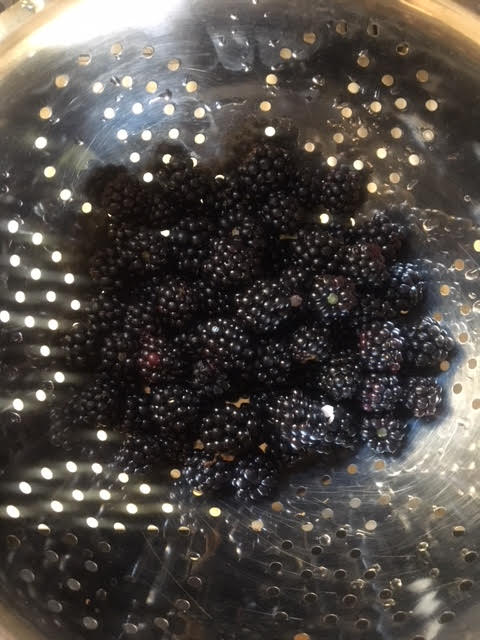
The good side of this is that while pottering in the garden in half time I discovered that the brambles in the corner have produced. That’s what I call a score! Some was had with breakfast and the rest stewed down for a sort of jam. The challenge suddenly looks a teeny bit brighter, but that might also be because I am half way through.
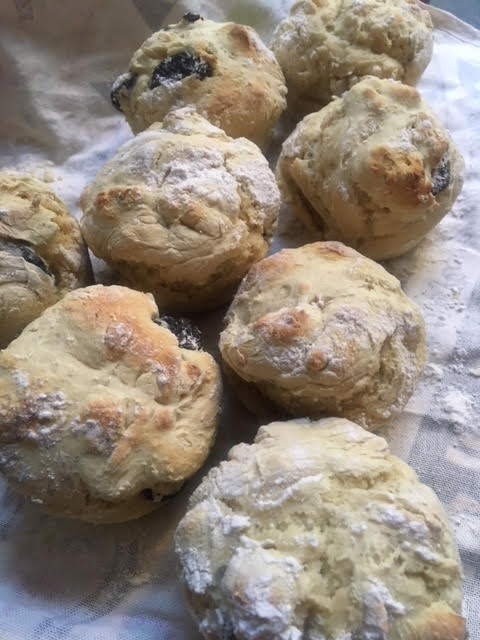
One can still sponsor me here. On Instagram I am called @Maskrosblad so you can look for me there, too.
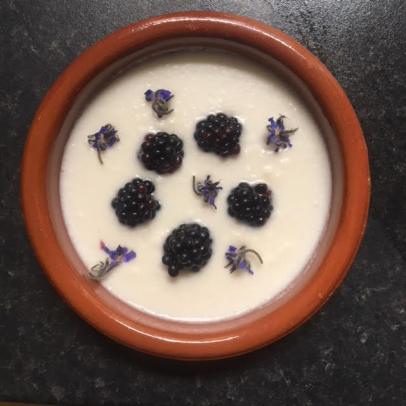
This was my breakfast this morning, coconut milk kefir with blackberries and borage from the garden. Kefir grains, sourdough cultures and kombuchas are excellent sharing items that produces highly nutritious and beneficial food. They multiply, so sharing a portion with a friend so that they can start making their own is a lovely gesture. Maybe you’ve even come across Herman the German friendship cake? I have come across it a couple of times and must admit it becomes a bit of a burden when it comes to shifting the portions to friends… but perhaps we should embrace customs like this a bit more eagerly.
Last but not least, I do this to raise awareness of food poverty in general and holiday hunger in particular (see my earlier posts for more facts). You can sponsor me here. On Instagram I am called @Maskrosblad so you can look for me there, too.
Holiday Hunger Day 3: variety is a spice
11 July, 2018
Variety is a spice of life they say but at the moment I have neither variety nor much spice. Although the challenge, as I eluded to before, is encouraging one to be thrifty and creative it is incredibly dreary with such small margins.
On my way to work today I caught myself thinking very dark thoughts but managed to attribute my feelings to the challenge. No big decisions will be made this week. I found this article in Women’s Health that might shed some light on what a wide ranging problem perpetual hunger is.
Now, my challenge has only been going on for 2 days and a bit so I doubt it’s this playing, I rather think it’s the constant headache (which is caused by low blood sugar and muscular tension most likely).
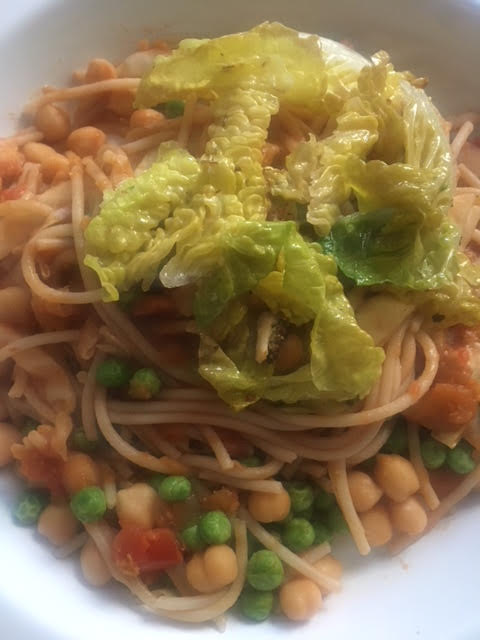
As for this dinner, I was perfectly shaking before eating hence the camera steamed up and hence me not giving any thought or attention to the styling. One can still sponsor me here. On Instagram I am called @Maskrosblad so you can look for me there, too. Bon appetit!
Holiday Hunger Challenge day 2: that’s better
10 July, 2018
Woke up slightly better poised for the challenge today. Headache gone and made a batch of chickpea pancakes (mine includes an egg, but a vegan version is fully possible). As well as setting me up nicely today I have another two servings in the fridge.
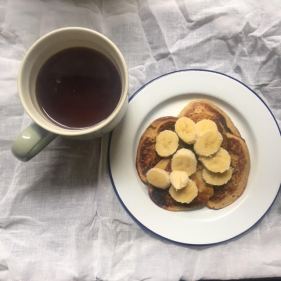
And as I was to work I left this simmering away. Someone said the slow cooker might be the salvation of the hunger challenge. I think I already agree:
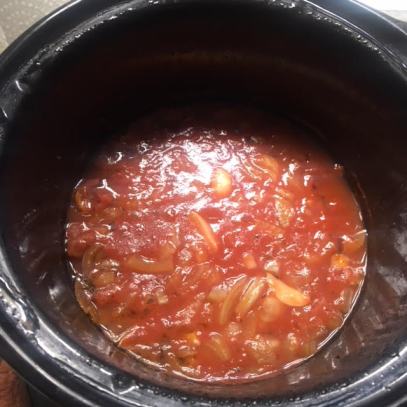
I ate my ragu with potatoes and chickpeas. I am longing for some fresh raw veg so will need to see to this asap.
You can still sponsor me here.
And on Instagram I am called @Maskrosblad.
Holiday Hunger Challenge day 1: on the go
10 July, 2018
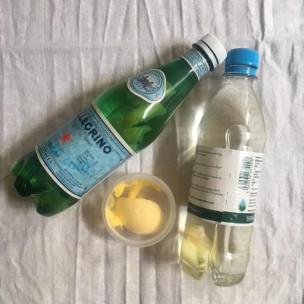
The challenge was off to a tricky start as I dashed out the door at 5.30am leaving my carefully prepared water with lemon in the fridge. It was next to the little pot of butter to go with some lovely soda bread I baked (in the wake of my dead sourdough).
A miss like this cost me 50p from my emergency pot of money which has set me back pretty heftily already. I am struck by how spontaneity and independence has already gone out the window, a pounding headache taking its’ place.
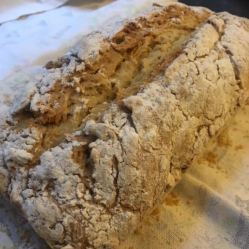
It doesn’t get more exciting than this today. Breakfast was two slices of this with a 20p avocado. Lunch was a tin of baked beans along with this bread too – I wolfed it down too quickly to manage a picture. And for supper on the train home I had porridge (prepared oats and hot water in a thermos flask).
Tomorrow will be better.
You can still sponsor me here.
And on Instagram I am called @Maskrosblad.
Holiday Hunger Challenge day 0: simulating poverty
8 July, 2018
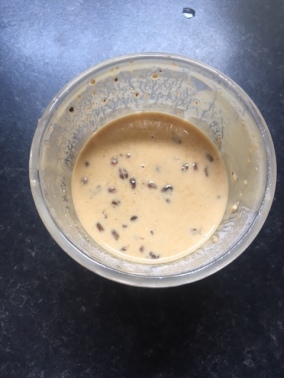
I think this is what a dead sourdough starter may look like. I’m kicking myself for not having learnt this useful skill earlier; by keeping a sourdough starter culture in my house I would have a healthy alternative to shop bought, cheap bread by now. I am in the category of people who while not allergic to wheat feel generally rubbish whenever I eat the mass produced version. I dare not risk attempting to bake with above, in case I waste a whole loaf’s worth of ingredients.
Taking on a challenge like this is to simulate how food poverty might make you feel and how it might affect your life. I can only speculate in what situation would put me on the breadline: if I lost my job, got seriously ill, and a handful of political and societal factors. If I did wake up in any of these situations tomorrow I would be able to “coast” on what I have in my cupboards for a fair while, but there is no point in cheating for the challenge. What is impossible to predict is how well I’d be able to manage myself. I am currently very organised and generally optimistic about difficulties but if for example illness got me then that might be knocked out of me. But for now, I have my wits about me and will let the challenge develop the nasty side effects of hunger I know will come in due course.
For oil, salt, grains and pulses I have put a nominal cost in my budget as I wouldn’t buy all these things at once. But apart from salt the spice cupboard is off limits, as are the big bags of wonderful Malawian coffee I have in my possession. Giving up coffee is crucial to the challenge, I’ve learnt that the hard way as it cranks up my system and make me really hungry really fast.
I have made a trip to the local greengrocer (I am lucky as I have oodles of them nearby) for some bargains. For animal product (butter, eggs and some milk) I have bought organic as such are my principles; I’d go vegan over buying factory farmed stuff but this is my choice and not one I would insist on others.
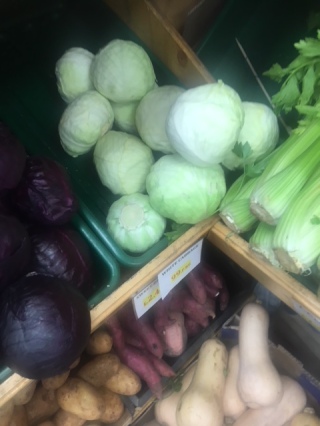
I’m as ready as I’ll ever be, so wish me good luck and sponsor me here. On Instagram I am called @Maskrosblad so you can look for me there, too.
Back to basics
7 July, 2018
It’s now the third time I gear up for a FoodCycle food poverty challenge so I have a vague idea what I’m in for. If past experiences are anything to go by I know that despite having been on expensive cooking courses, being surrounded by amazing cooks and cookbooks and knowing my way around a greengrocer’s, I’m going to struggle.
This challenge stimulates. Thriftiness and positive thinking are easy to hand for someone who is doing a week long challenge for charity. For those who really are on the breadline, though, those two ingredients may just not be at hand. It is draining to worry about where the next meal is going to come from, and if the future offers no relief in sight then low mood is a likely side serving.
I’m going to swing a hectic week to be part of the task at hand: my Holiday Hunger Challenge week is going to kick off with a 14-hours-away-from-home working day.
One would be forgiven for thinking that “hungry at work” is an oxymoron, as someone with a job wouldn’t be starving. This is wrong though, as many of UK’s food poor are working poor. To add to this, many are the parents who have to skip meals to feed their children, according to the All Party Parliamentary Group on Hunger’s Inquiry on Holiday Hunger .
It may be a day or two into the challenge before I can properly poise myself and bring out my inner Mrs Beeton. My veg box has been cancelled, the takeaway account blocked. Train station food will be too dear a cupboard staple supplement so we’ll see what journey food I will manage. I’m gearing up to observe my mood sink day by day- and to find little tricks to change the forecast.
And here is the link to my JustGiving page. Wish me good luck!
People still go hungry
4 July, 2018
I’m not entirely sure where 2017 went (it was a hectic year), but now it’s 2018 and time for another food poverty related challenge. FoodCycle has relabelled its’ Breadline Challenge to Holiday Hunger Challenge. Same issue and same challenge: live off £2.50 a day for food for a mere week.
Before you read on, this here is the link to my JustGiving page. Don’t feel obliged, we all have challenges to face, but know that even something as modest as £5 is a 2 day food budget for some.
___
Food poverty. It’s hardly a word that’s gone anyone by, a term we use to explain why food bank use has not only started to “be a thing” but that the use is increasing rapidly and why even working parents have to skip meals for the benefit of their children. The term is good as it highlights an issue that should not exist in a welfare state. It insinuates that we might not be one, and that’s a harsh reality to wake up to. But it doesn’t even stop there.
The uncomfortable truth is that the issue isn’t food, it’s poverty. The knock on effect of poverty goes far beyond food, but becomes evident through it. Though food prices have gone up over the last couple of years it is still way cheaper than in the 50’s (16% of avg household income spent on food in 2003 compared with 33% in 1953). So why has The Trussell Trust supported the opening and operation of more than 400 food banks nationwide in the last ten years?

Despite the nation’s wealth having doubled in the last 30 years the income of the poorest 20% of this country is way below that of their equivalents in other EU countries. This teamed with an inflation of 30% in 2003-2013 and increasing prices of utilities and of housing makes for a situation in which food is going to be where costs are cut. Remember that these are national averages. In 2012, households in the lowest income decile spent 40% of household expenditure on housing, fuel and food.
In addition to this we have more costs to add to our baseline. It is hard to exist in the modern society without a mobile phone, internet connection and a credit card. With more regular bills to pay it takes little to spin out of control and start accumulating late payment fees. Bad debt and sudden expenses is just behind low income and delayed benefit payments to warrant a visit to the nearest food bank, according to the Trussell Trust.
I haven’t even begun deciphering the issues of minimum wage and Universal Credit (for the non-Brits reading this, U C is the term for a one-stop-shop benefit system that has rattled the bones of welfare Britain in its’ introduction. The film “I, Daniel Blake tells the story of two different individuals falling victim for this very well).
Regardless of opinion on where the fault may be it should be pretty clear that children should not bear the burden of a challenged adult world. Children of households of low or no income receive free school meals in this country and though this also comes with a plethora of issues and obstacles a simple conclusion is of course that this benefit is not available during school holidays.
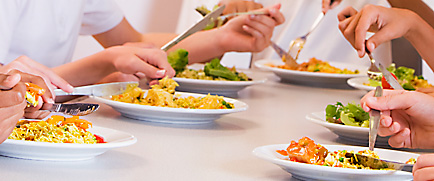
Being hungry during school holidays is more than about having a bad time. Little brains need consistent and nourishing food to grow and develop. Being hungry for a duration of time literally means that these kids end up a step or two behind their pals. In other words we see those who are privileged and those who are not. No prices for guessing who the lowest 20% income earners of the future may be.
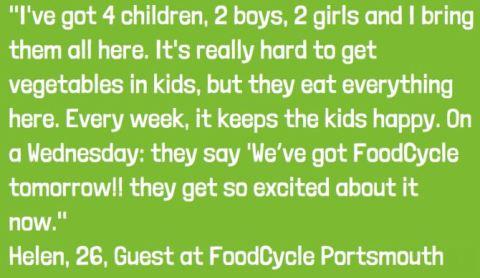
I will be blogging about my own attempt on living off £2.50 a day during the next week, but just wanted to introduce a bit of background before I do. Thank you for visiting and for at least in reading this supporting what I and a whole bunch of others are about to do.
Once more here is the link to my JustGiving page.
Sources:
Feeding Britain, the All-Party Parliamentary Inquiry into Hunger in the United Kingdom
The Trussell Trust end of year stats
Emotional food
25 November, 2016
Day 5 of the Breadline Challenge.
We start shaping our relationship with food so, so early. It only takes one bad memory to put you off something for good. I am lucky to have grown up in a house with emotional stability and always food on the table- even if it at times was a tad scarce.
My only traumatic food is pan fried breaded herring (like the Swede I am). It wasn’t something we ate often, in fact the first time it was served my mum declared “it’s because it’s cheap, and we have lots of expenses this month”. It was also the same month my grandmother died (the expenses were related to her funeral), thus I now affiliate this devil’s food with my grandmother’s death. It doesn’t take more psychology than that, seeing my mother so very sad at an age of 10 obviously shaped a lot of memories.
Anyhow, this Breadline challenge is not a walk in Sara’s childhood though I must admit that in my own adulthood I have shaped many luxurious food habits that I’ve had to kick for the challenge, remembering times when I didn’t quite have this much (hence the post below, too).
The point is that although the food was perfectly wholesome and nutritious and in some regard also sustainable (herring is one of the few fish we can still eat every now and again), it was my mother’s grief that put me off it. We all have emotional relationships with food and no matter what your safety- or comfort- food may be, the very lack of this is going to send you wobbly at a time when you’re probably already wobbly. I read this bit in here:
“Meat is so expensive these days. When I was growing up we’d only have fish fingers or something once or twice a week, and proper food the rest of the time, now it’s the other way around. We only have proper meat once a month now.”
Regardless of opinion on meat eating, I for one know that so many problems would be solved if we all adapted a more vegetarian- in fact mostly vegan- diet, I can’t help but interpret Tracy’s remark as despair for not quite being able to provide what she once had. The Trussell Trust have so far this year handed out some 200,000 food parcels to children. How many pan fried-herring traumas are being shaped in people who have slipped below the line just now?
I think that all charities who empower people through food- such as Foodcycle or London’s Made in Hackney– will play a part in ending food poverty. But ultimately, I have this from the Food Ethics Council in my mind:
“The government has a responsibility to identify and address the structural inequalities in household income and access to food that contribute to food poverty. Minimum wage and benefit levels should be sufficient to ensure that all households have a living income, not merely a survival income. And food retailers should proactively seek to ensure that that the healthiest foods are affordable and accessible to all.”
Another relatively sustainable and healthy fish to eat is anchovy, which suits me very well as this old classic recipe by my colleague makes a mighty fine dinner (several times, and lunches, for about 40p a portion, if you omit the parmesan): 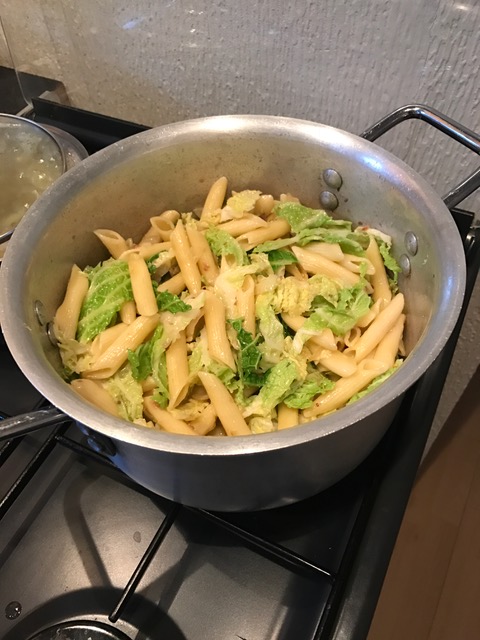
Back to basics
20 November, 2016
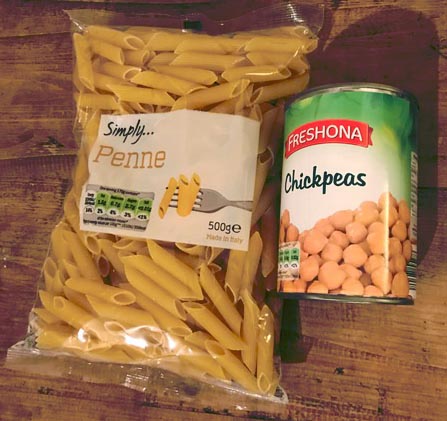
Today I went to Lidl to get a few more supplies for the challenge. I remember being a student in Stockholm and making bi-weekly trips to the nearest equivalent (Lidl hadn’t reached Sweden back then) and how determined I was to only purchase basics, and no processed foods. I remember the feeling of wanting to eat wholesome food, and not quite being able to, I remembered it as I was walking between shelves of salty, insubstantial bargains. Sometimes slipping, back then. But this time I didn’t, for I knew this is only for a week.
And I remember just how distracting it was from my actual studies, to have to think of how to feed myself as wholesome on as little as possible. I had the time and freedom to do this, which often isn’t a luxury those truly on the breadline have. This phenomenon is called the poverty premium, the notion that those who can’t hunt for bargains are worse off.
I have managed to purchase some basics to a mighty sum of £14- leaving me with £3 for food emergencies for the rest of the week.
Wish me good luck, and support me here.
 Sara Grön